

Search Website
The Uses and Gratifications of TikTok During COVID-19
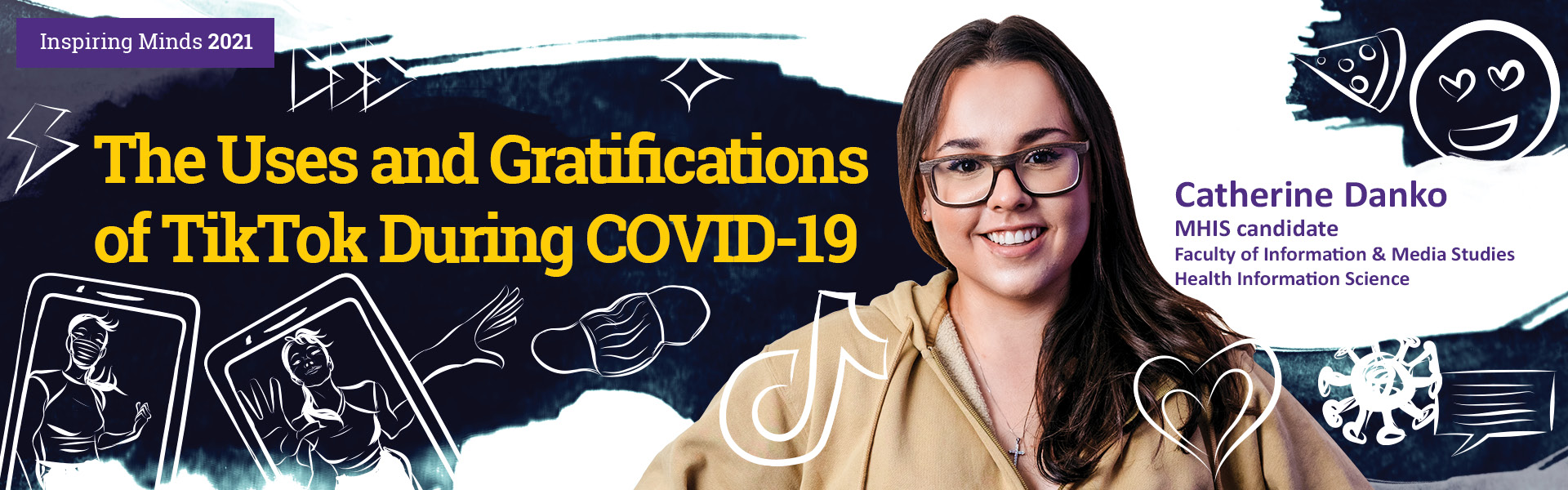
By Catherine Danko
Catherine Danko is exploring how TikTok supported mental health during pandemic isolation.
By Catherine Danko
MHIS student - Health Information Science
Faculty of Information and Media Studies - Western University
Social media use may have positively impacted mental health during the COVID-19 pandemic. During the first wave of government enforced lockdowns, the number of TikTok downloads skyrocketed past the 2 billion mark, making the platform a worldwide phenomenon. People gravitated towards the app because of its entertaining features: unique video effects, sounds, humorous content, and online community. For some, the platform may have benefitted their mental health during a period of intense social isolation. This research project looked at TikTok videos posted during lockdowns for a more comprehensive understanding of how TikTok fostered social connectivity, creativity, and escape from mental health issues during COVID-19. The videos consisted of people creating artwork, engaging in dance challenges and household competitions. The videos were analyzed through the application of a theoretical framework that theorizes why people gravitate towards certain mediums and how they fulfill specific needs.
Catherine completed her Master of Health Information Science in August 2021 and is currently completing a Master of Media in Journalism and Communication at Western University. She has an undergraduate degree from Brock University in Child and Youth studies from which she graduated in 2019. Her research interests include social media, mental health and journalism. In the future, she hopes to work as an arts and culture writer at a news publication. You can find and connect with her on LinkedIn.
View Catherine's work as it appears in the Inspiring Minds Digital Collection.