

Search Website
Anti-gender movements in a global context: A comparative analysis of challenges to LGBTQIA+ rights in educational systems in Latin America and North America
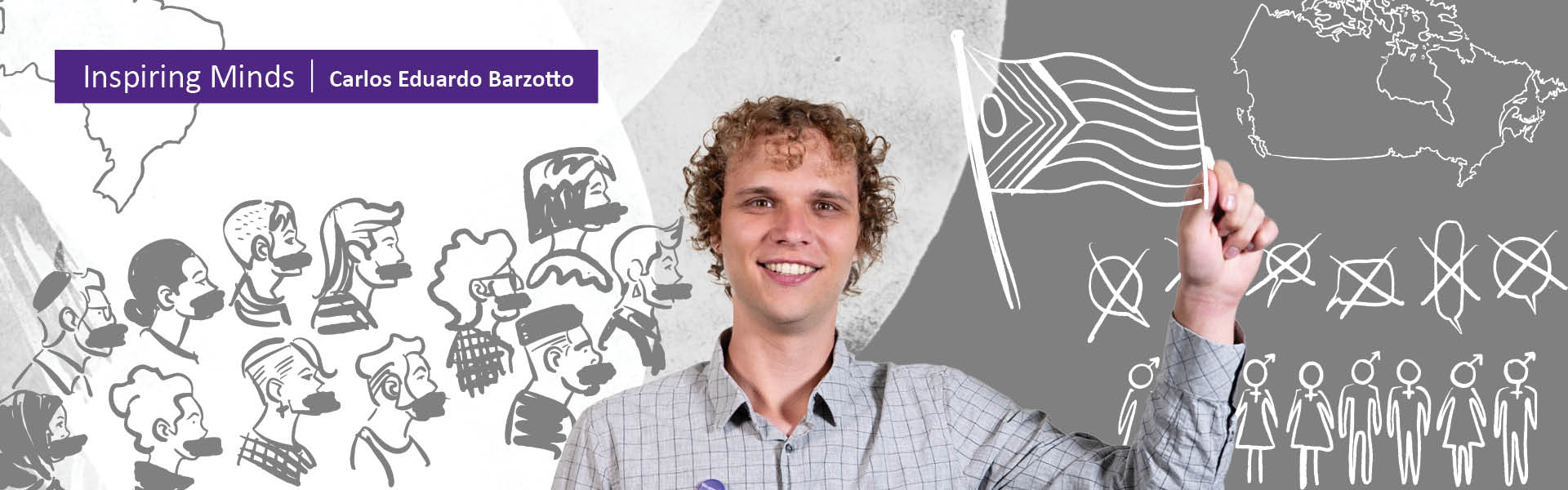
By Carlos Eduardo Barzotto
Carlos Eduardo Barzotto is a PhD candidate in Education.
By Carlos Eduardo Barzotto
PhD candidate, Education
Faculty of Education - Western University
Over the past three decades, political movements opposing equitable, diverse, and inclusive policies have gained traction. Often referred to as anti-gender movements, they share a transnational rhetoric that aims to suppress the rights of women and LGBTQIA+ communities. In many countries, these groups have targeted school systems, seeking to ban discussions related to sex education, gender, and sexuality, and to dismantle inclusive policies for trans students. In this scenario, my research investigates how anti-gender movements develop strategies and transnational networks to undermine the educational rights of queer youth. Using a Foucauldian discourse analysis of anti-gender movements in Brazil and Canada, I examine how they operate discursively across national contexts. This analysis aims to expose the mechanisms of anti-gender discourse in education and contribute to countering the backlash against diversity policies in education. Ultimately, it supports the creation of safe, inclusive educational environments that affirm the expression of all students.
Carlos Eduardo Barzotto (he/him) is a Brazilian educator and researcher who is currently pursuing a PhD at Western University's Faculty of Education. His research investigates the global emergence of anti-diversity and anti-gender legislation in education, with a comparative focus on South and North America. By analyzing the discourses produced by these policies and the actors who champion them, Carlos seeks to understand how educational gender-related equity initiatives are being challenged worldwide. By doing so, he aims to inform the development of new frameworks for institutionalizing Human Rights and equity-based policies within school systems. As a firm believer in education’s (trans)formative potential, Carlos unites his scholarly work with seven years of experience as a school teacher, during which he actively contributed to school board initiatives addressing sexism, racism, and LGBTphobia. Grounded in both practice and policy, his commitment lies in building inclusive educational environments that confront discrimination, prejudice and inequality. Through his research and advocacy, he aspires to foster pedagogical approaches rooted in equity, respect, and meaningful engagement with the realities of marginalized communities.
Carlos' research is highlighted in episode 525 of GradCast, the official podcast of the Society of Graduate Students at Western University.
You can connect with Carlos on LinkedIn.